Interlude · Historical Precedent & Structural Concession
Interlude: What the Big Thing Builds
An honest concession about where local AI comes from, followed by three documented precedents in computing and media.
1. The Concession: Local AI Exists Because of Big Data Centers
We begin with a plain concession. Local AI did not emerge independently of centralized training clusters. Frontier pre-training in large data centers—where training compute grew roughly 4–5× per year from 2010 to 2024 [S04]src and 5× per year since 2020 [S23]src—produced the base capabilities that local systems now inherit.
Four documented technical mechanisms moved those capabilities from clusters onto small devices:
- Algorithmic efficiency and distillation: Pre-training compute for a fixed performance threshold halved roughly every 8 months over 2012–2023 [S03]src. Knowledge distillation established that predictions from cumbersome large models or ensembles can be compressed into a single smaller model suited for broad deployment [S38]src—a mechanism that now transfers reasoning traces from frontier teachers into compact students [S21]src.
- Post-training quantization: Methods such as GPTQ showed that a 175-billion-parameter model can be compressed to 3 or 4 bits per weight in roughly four GPU hours with negligible degradation, fitting on a single GPU and extending down to 2-bit and ternary regimes [S39]src.
- Parameter-efficient local adaptation: QLoRA demonstrated that gradients can be backpropagated through a frozen 4-bit pretrained model into low-rank adapters, allowing a 65-billion-parameter model to be fine-tuned on a single 48 GB GPU while preserving 16-bit task performance [S40]src.
- Open-weight distribution: Starting with releases such as Meta's LLaMA (7B–65B trained exclusively on public data, with LLaMA-13B outperforming 175B GPT-3 on most benchmarks) [S41]src, open-weight models narrowed their lag behind closed frontier systems to an average of four months on public evaluations in early 2026 [S02]src.
The local layer is therefore parasitic on the centralized layer for its capability, but not for its operation. Once weights are distilled, quantized, and published, inference runs on devices users already own without per-token billing. This essay's argument is that this dependency strengthens rather than weakens our thesis: it does not imply that standalone centralized-API labs retain their commercial franchise. Rather, the centralized cluster functions as the training ground that creates the capability later captured by the smaller local layer, which then displaces recurring API revenue.
2. Three Documented Precedents
Each example below is restricted strictly to what primary corporate histories, museum archives, and U.S. SEC filings confirm. The parallel to AI is our argument, not an established historical law.
A. Mainframes to Personal Computers (IBM 5150 and the 1983 Clone Ecosystem)
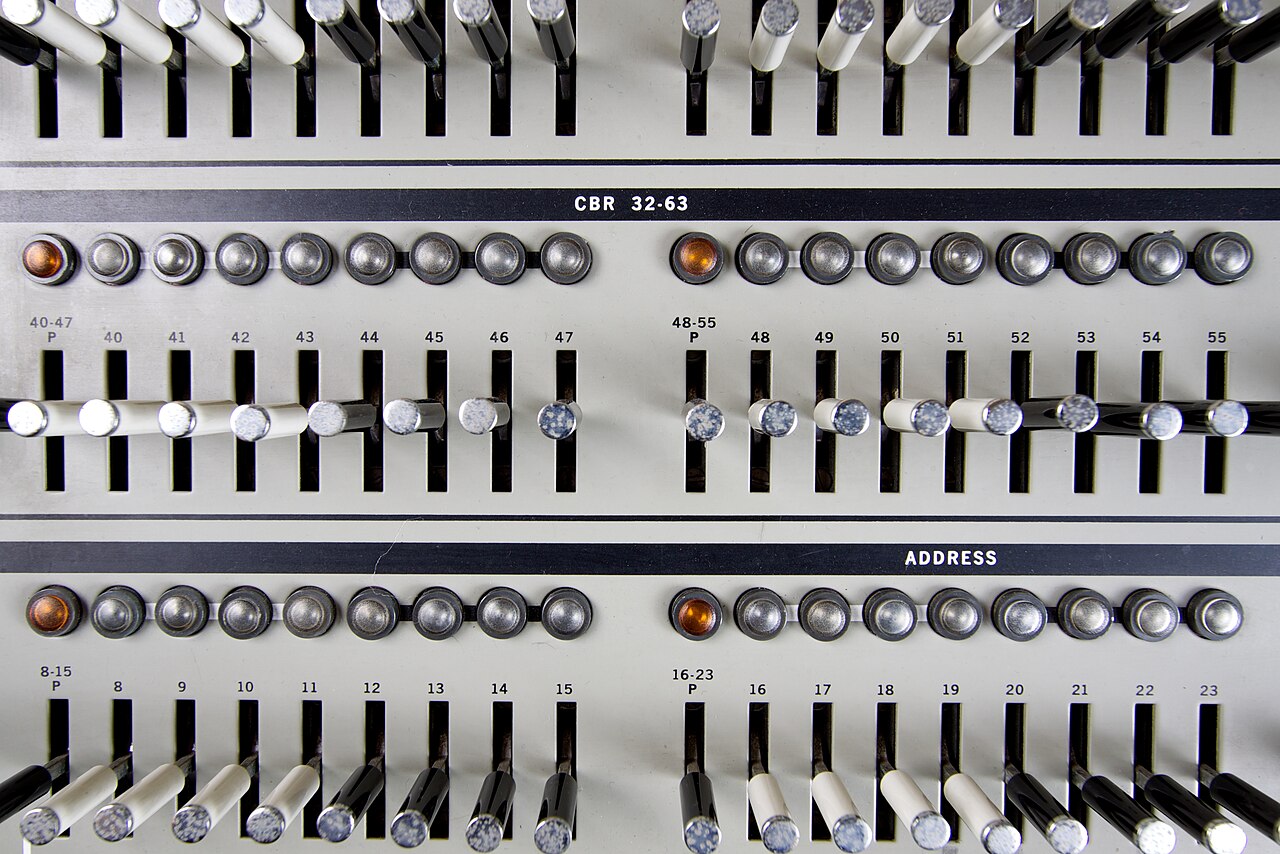
Before August 1981, IBM sold computers primarily to businesses; its closest portable offering was a USD 9,000, 50-pound unit [S42]src. In 1980, lab director William Lowe pitched IBM CEO Frank Cary on a machine for small businesses and consumers targeting a USD 1,500 price point—a challenge that IBM's own history states would “bring the power of 1960s mainframes to small businesses and households” [S42]src.
To meet a one-year schedule and the USD 1,500 target, Don Estridge's team broke with IBM's vertically integrated practice: it built the Model 5150 from off-the-shelf components (Intel's 8088 processor and Microsoft's MS-DOS) and published an open technical reference of circuit designs and source code so outside developers could build software and peripherals [S42]src. Unveiled on 12 August 1981 at USD 1,565, the machine shipped with spreadsheet and word-processing programs (VisiCalc and EasyWriter); within a year, more than 750 software packages were available [S42]src. In 1983, Compaq released the first clone reproducing IBM's publicly documented PC architecture, which the Computer History Museum records as beginning the gradual decline of IBM's share of the personal computer market while creating a broad ecosystem of software, peripherals, and compatible hardware [S43]src.
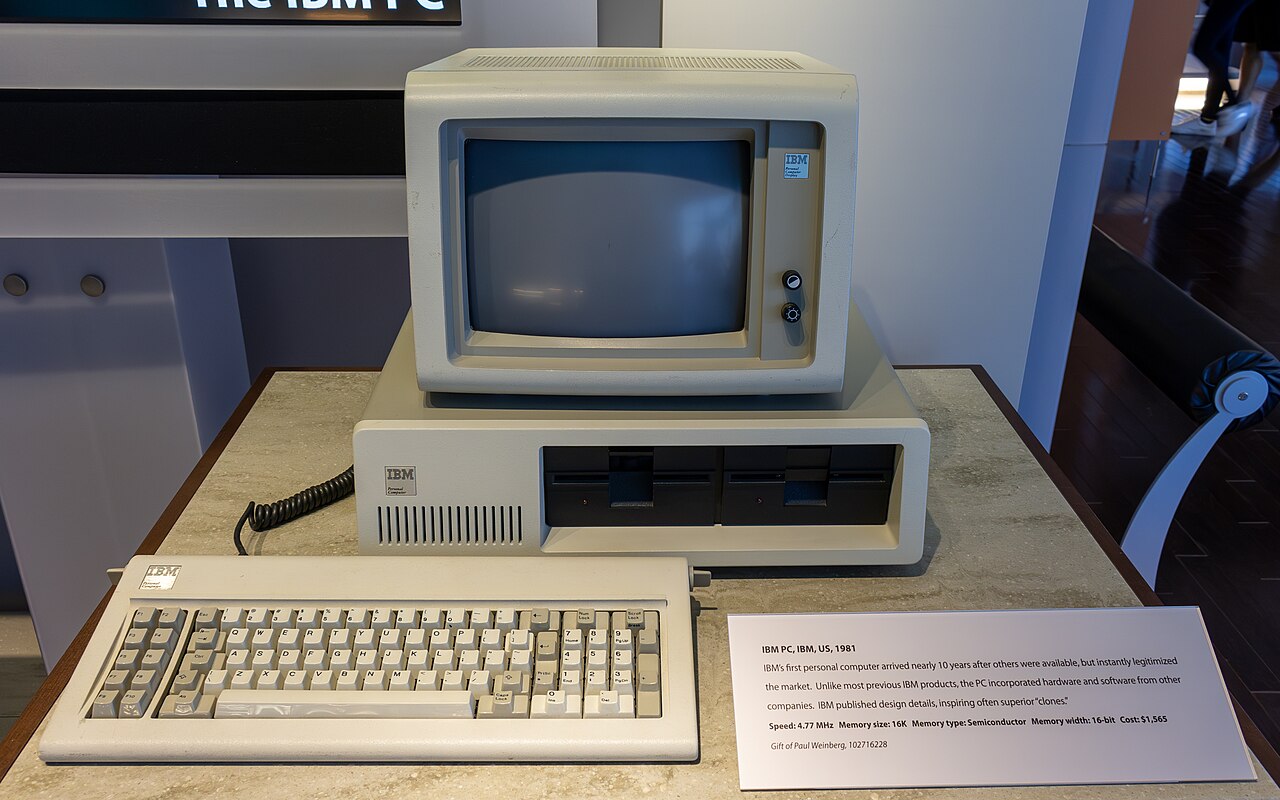
Notice what this precedent does and does not show. Mainframes did not disappear; IBM remained a major enterprise vendor and later exited commodity PCs to focus on services, software, and larger systems [S42]src. What changed was the default computing platform—driven not only by falling component cost (~USD 1,500 target), but by open specifications and a usable software ecosystem (connecting directly to our user-experience argument in Chapter 5).
B. Kodak and the Digital Camera
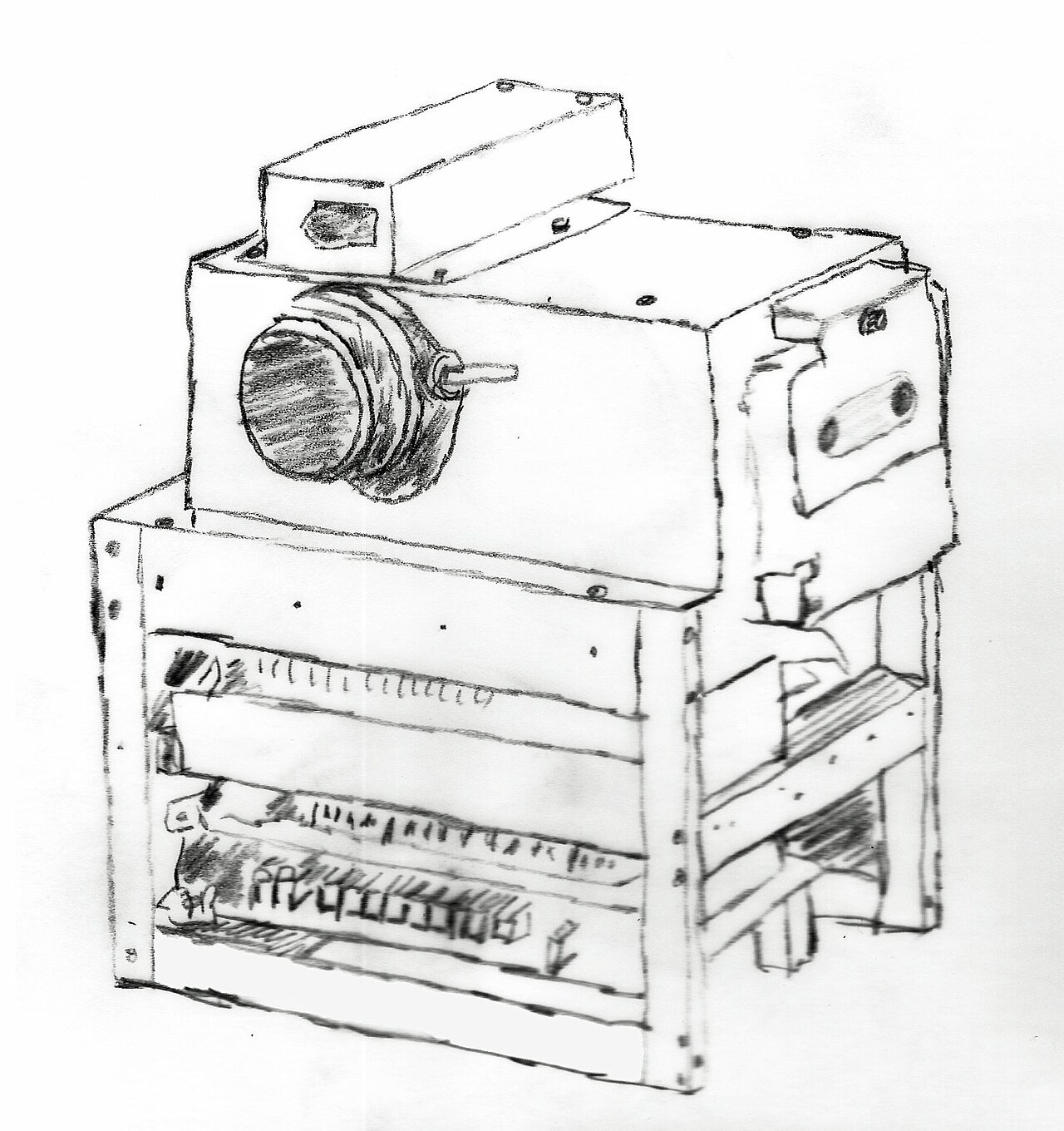
Kodak's own historical record states that it invented the world's first digital camera in 1975 and the first practical megapixel CCD sensor in 1986 [S44]src. The National Inventors Hall of Fame documents that Kodak engineer Steven Sasson built that first self-contained digital camera in December 1975, and later developed the first self-contained DSLR in 1989; “To protect the company's film sales, Kodak initially declined to sell the product” [S45]src.
In its FY2011 Form 10-K, Eastman Kodak reported that its consumer and professional film and traditional photofinishing markets “are in decline and expected to continue to decline due to digital substitution” [S46]src. On 19 January 2012, Eastman Kodak Company and its U.S. subsidiaries filed voluntary petitions for Chapter 11 bankruptcy relief in the Southern District of New York [S47]src, and in 2012–2013 closed, sold, or spun off its consumer imaging lines [S44]src. The documented fact is direct: the incumbent built the enabling technology inside its own laboratory and was later restructured after that technology displaced its core consumable business.
C. Blockbuster and Netflix (SEC Filings Only)
We restrict the Blockbuster case strictly to primary SEC disclosures. In its FY2008 Form 10-K, Blockbuster Inc. explicitly listed “Internet sites and companies that rent or sell movies and other entertainment content, such as Netflix” among its competitors, and observed that digital-delivery efforts from companies including Apple, Amazon, Netflix, and Intel “signal future growth of video entertainment delivery” [S48]src. On 23 September 2010, Blockbuster Inc. and certain domestic subsidiaries filed voluntary petitions under Chapter 11 in the Southern District of New York [S49]src.
Those two filings do not by themselves establish single-factor causation—debt load, store leases, and capital structure all contributed to Blockbuster's distress—and we omit popular unverified anecdotes that are not in the primary record. The analogy drawn here is our argument: recognizing an emerging distribution shift in official filings does not immunize a capital-heavy incumbent committed to legacy fixed obligations.
Timeline data table (click any event on the interactive timeline above to inspect its quote and source)
| Date | Event | Verbatim record | Source |
|---|---|---|---|
| Dec 1975 | Kodak engineer Steven Sasson builds first self-contained digital camera | “This was the world's first self-contained digital camera.” | NIHF [S45] |
| 12 Aug 1981 | IBM unveils Model 5150 PC at USD 1,565 | “bring the power of 1960s mainframes to small businesses and households”; open architecture and off-the-shelf parts. | IBM [S42] |
| 1983 | Compaq releases first clone of IBM PC architecture | “begining the gradual decline of IBM's share of the personal computer market.” | CHM [S43] |
| 1989 | Kodak develops first self-contained DSLR; initially declines to sell | “To protect the company's film sales, Kodak initially declined to sell the product.” | NIHF [S45] |
| FY2008 10-K | Blockbuster names Netflix and digital delivery in SEC filing | “Internet sites and companies that rent or sell movies... such as Netflix”; digital delivery signals future growth. | SEC 10-K [S48] |
| 23 Sep 2010 | Blockbuster files voluntary Chapter 11 | Voluntary Chapter 11 bankruptcy petitions in SDNY (case 10-14997). | SEC 8-K [S49] |
| 19 Jan 2012 | Eastman Kodak files voluntary Chapter 11 | FY2011 10-K noted film markets “in decline due to digital substitution”; Chapter 11 filed in SDNY (case 12-10202). | SEC 8-K [S47] |
| Centralized incumbent | Smaller / distributed successor | What the primary record states | Source |
|---|---|---|---|
| IBM mainframes | IBM Model 5150 PC & open clones | 12 Aug 1981 USD 1,565 open-architecture PC; 750+ first-year software packages; 1983 Compaq clone began gradual decline of IBM's PC share; IBM later focused on services and larger systems. | [S42] [S43] |
| Eastman Kodak film | Digital photography (1975 prototype, 1989 DSLR) | Kodak engineer built first self-contained digital camera (Dec 1975); initially declined to sell 1989 DSLR to protect film; FY2011 10-K cited “digital substitution”; Chapter 11 filed 19 Jan 2012. | [S44] [S45] [S46] [S47] |
| Blockbuster retail stores | Internet & digital video delivery | FY2008 10-K listed internet rental companies “such as Netflix” as competitors and noted digital delivery signals future growth; Chapter 11 filed 23 Sep 2010 (filings do not alone establish causation). | [S48] [S49] |
3. Limits of Historical Analogy
Historical analogies can mislead, and we do not treat them as proof of any prediction in this essay. Each precedent had its own balance sheet, cost curve, and competitive structure. Incumbents also survive, adapt, or move up the stack: IBM exited commodity PC hardware decades after 1981 while remaining a large enterprise technology firm, and diversified cloud hyperscalers today possess non-AI cash flows that neither Kodak nor Blockbuster had (a point we credit explicitly in Chapter 3 and Chapter 7).
The narrow lesson we advance—explicitly as the essay's argument, not an iron law—is structural: the large centralized system is often the training ground for the smaller, more usable system that later displaces its high-margin revenue. In AI, centralized frontier clusters are already performing that enabling role via distillation, quantization, and open weights. Whether that dynamic breaks standalone frontier-API economics is tested by the arithmetic and falsifiers in Chapters 1 through 7, not by analogy alone.